Complaint Analysis
See how the judge, a mediator and defense counsel will read a complaint before they do.
Complaint Analysis gives a complaint to seven AI analysts, each reading from a different seat. You get every read, a synthesis, and a Disagreement Matrix that lists each point where the analysts split and which position the complaint better supports. Run it on your own draft before you file, or on a complaint just served on your client before the first call.
Every model runs under contractual no-training terms, and unsaved results are never stored on Bells Up servers. Where your client’s information goes. Complaint Analysis is part of the Professional plan, $99 per user per month.
Who reads the complaint
Each analyst reads the full complaint on its own and writes a separate assessment.
- Judge’s First Read: threshold adequacy, how manageable the case is, and exposure to dispositive motions.
- Mediator’s Pre-Read: the emotional temperature, leverage, and what each side wants beneath the legal claims.
- Defense Counsel’s First Read: threat assessment, points of attack, and what the complaint carefully avoids saying.
- Factual Narrative: what the complaint alleges, what it implies, and what it leaves out.
- Threshold Defenses: subject-matter jurisdiction, personal jurisdiction, venue and standing.
- Legal Sufficiency: an element-by-element walk through each cause of action against the pleading standard.
- Damages & Relief: the exposure picture, statutory caps, fee-shifting, and whether the facts alleged support the remedies requested.
Example: EEOC v. The New York Times Co.
We ran the EEOC’s Title VII failure-to-promote complaint against The New York Times (S.D.N.Y., No. 1:26-cv-03704), as filed on May 5, 2026. The run took under four minutes on OpenAI’s GPT-6.1 Sol.
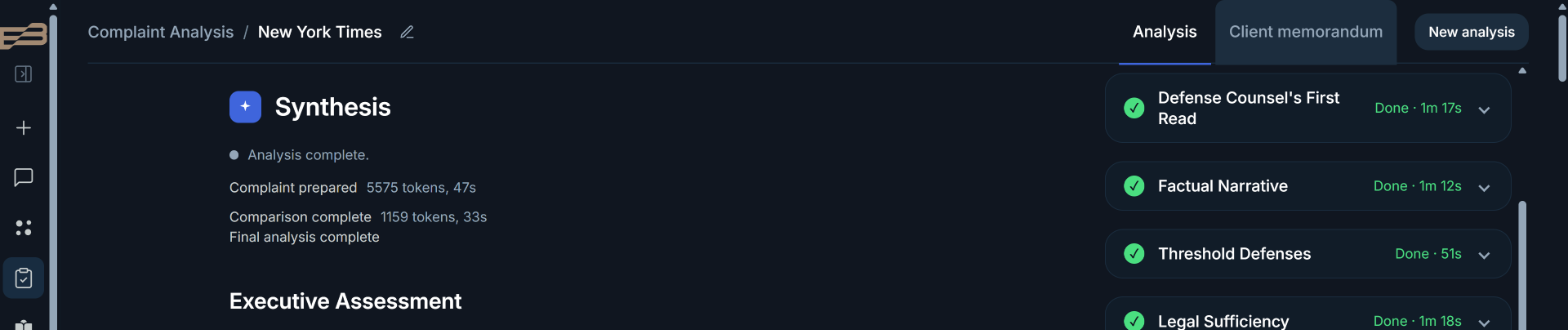
What it found in the complaint
Both theories are plausibly pleaded, and the strongest facts are about this vacancy. The synthesis found “stronger factual support for race than sex.” The posting called real-estate experience a “Requirement” (¶¶ 52–54), and the complaint measures the selection against it. Plaintiff’s counsel sees what is carrying the case. Defense counsel sees what a motion to dismiss is unlikely to knock out.
Its description of the policies goes further than its quotes. Paragraphs 29 and 31 call the Times’s policies “express efforts to make employment decisions on the basis of race and sex.” The measures the complaint actually quotes contain no such admission. The synthesis called the link between those policies and this promotion “the principal evidentiary gap.” That is where summary judgment will be fought, and where a drafter would add facts.
The complaint never says whether he still works there. Paragraphs 57 and 58 plead his job when he applied, and nothing after. That leaves the backpay measure open. Plaintiff’s counsel would plead it. Defense counsel would ask for it in discovery.
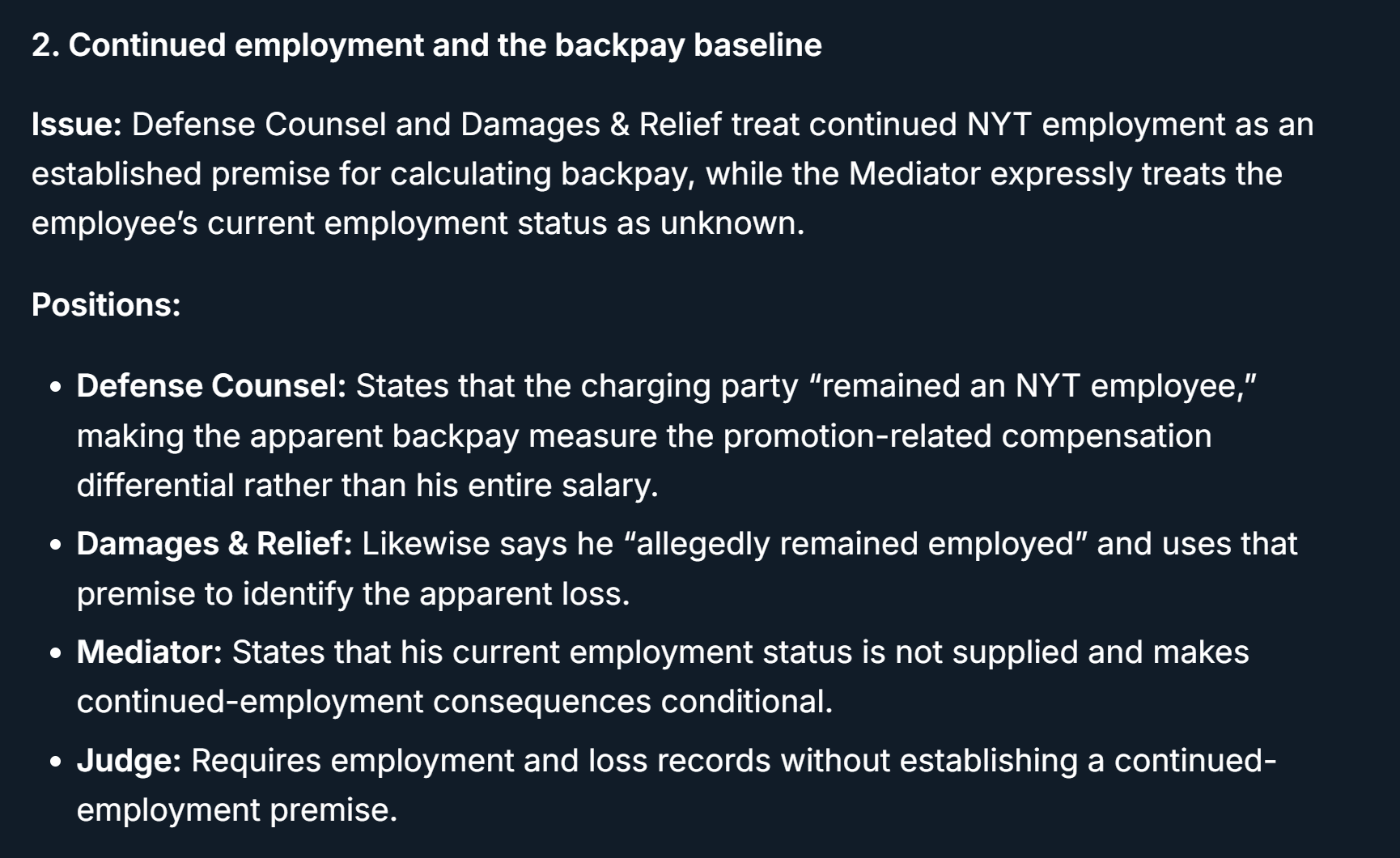
Winning on liability is not the same as winning the promotion. The synthesis noted that exclusion from the panel “can support liability without establishing that the Charging Party would have received the promotion—an important distinction for backpay and instatement.”
Run your own
These two screens come from a run on a fictional complaint.
- Add the complaint. Open Complaint Analysis under Workflows and stay on the Civil complaint tab. Paste the complaint text or select Attach file (up to 5 files, 15 MB in total; PDF, Word and other common formats). Choose a Model family and select Analyze complaint. OpenAI, Claude, Gemini, Grok, Kimi and GLM read a full complaint at once; other families may cut off a long one.
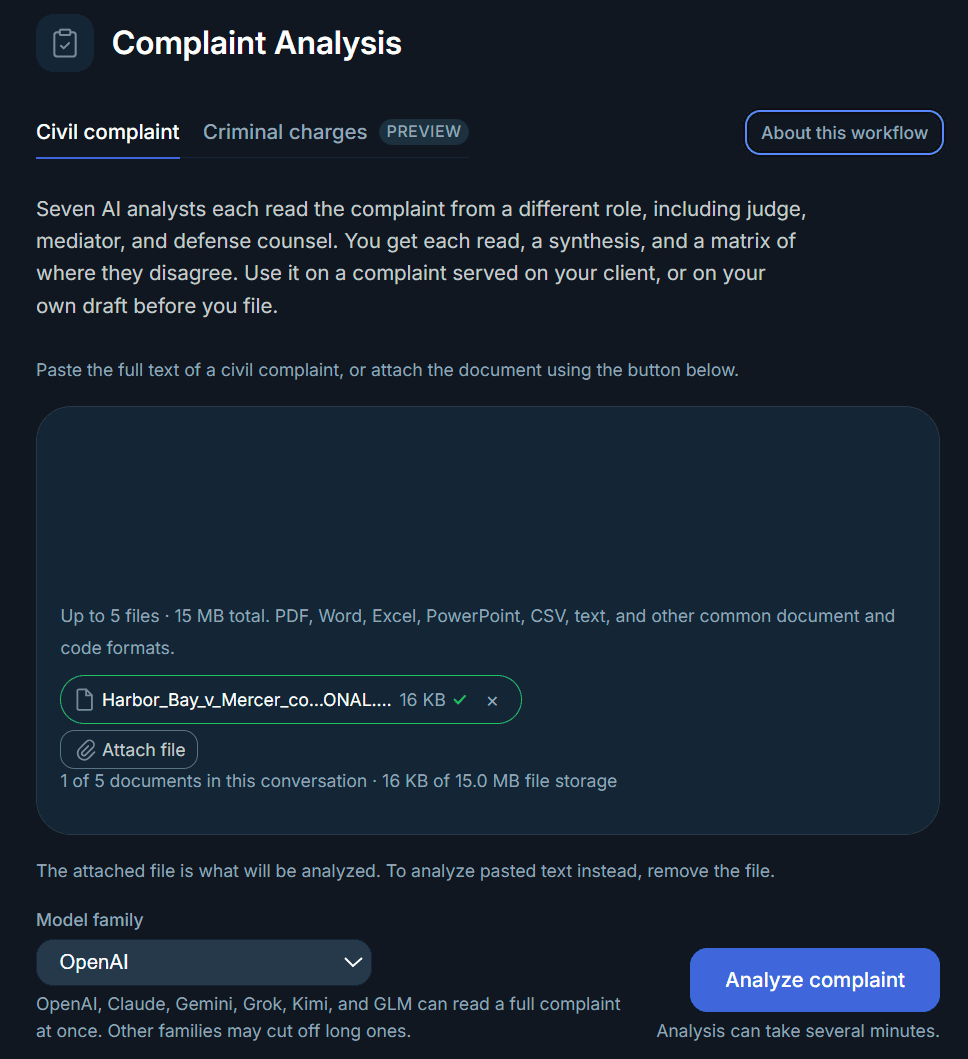
Attach the complaint, choose a model family and start the analysis. - Let the analysts work. The run has four phases: Bells Up prepares the complaint, the seven analysts read it in parallel, their reads are compared, and the synthesis is written. Each analyst’s card turns green when its read is done. Analysis typically takes several minutes, and a long complaint can run past ten.
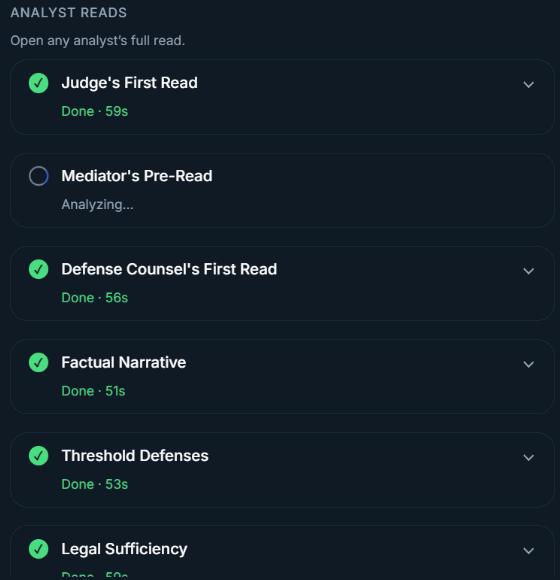
Each analyst’s card turns green when its read is done. - Read the synthesis, then the reads. The synthesis covers an executive assessment, the complaint’s strengths and weaknesses, open questions, differing viewpoints and limitations. Select any analyst under Analyst Reads to open its full read, and check the Disagreement Matrix before you rely on any single conclusion.
A memo for your client
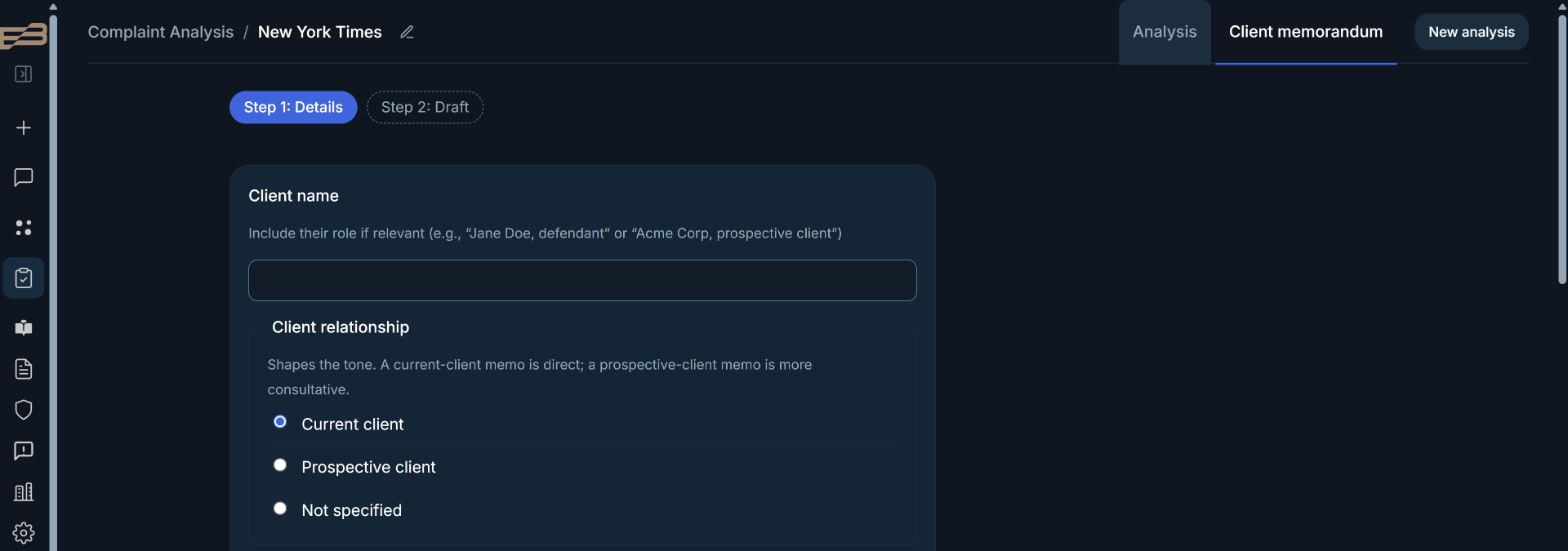
When the analysis finishes, the Client memorandum tab turns it into a memo to your client. If you represent the defendant, it explains the claims and the exposure. If you represent the plaintiff, it explains what the other side will argue. We added it at a customer’s request.
Keeping the results
Download the synthesis or the full analysis as a Word document, save it as a conversation, or continue in chat with the complaint and the synthesis loaded. Verification is part of the work, just as it’s always been.
Scope and limits
Complaint Analysis reads the complaint as pleaded. It does not see discovery, intake notes, settlement demands, later motions or court orders. Treat the output as a starting point for your professional judgment, and check every assessment against the factual record and current case law.
The same page has a Criminal charges tab that runs eight analysts on an indictment or other charging instrument, including a judge, a plea strategist and defense counsel. It’s in preview while we take feedback from criminal practitioners. If you practice criminal defense, try it and tell us what you think at support@bellsup.ai.
Run a complaint you know well and compare the reads to your own.
Open in the platform